Wednesday, May 19, 2010

Last Seminar / the path of recent work development + influences

Butoh:


January


.
.
.
.
.
.
.
.
.
March - May :


.
.
.
.
.
.
.
.
.
.


.
.
.
.
.
.
.
.
.

choosing / deciding / trying:
.
.
.
.
.
.
.
.
.
.
.
.
.
.
after initially thinking about a grand sized photographic composition resembling a National Gallery classical painting (thinking of Gericault's Raft of the Medusa and Ribera & Zurbaran's use of shadow and contrast (al la Caravagio) as reference;
I moved on to considering wallpaper for a possible installation also utilizing sound (human-animal, gutteral, breathing, out of breath, dark type sound):
.
.
.
.
.
.
.
.
.


I decided that I have very strong images and a lot of strong options with correctable flaws, so I am re-staging several poses for the project. I have 2 more photo studio appointments that are in time for preparations and 2 more in June which I don't want to use for creating work for the show but rather tie up loose ends as from June 26th or so the photo studio will close.

May:


.
.
.
.
.
.
.

and I was especially happy with this one:

.
.
.
.
.
.
.
.
.
.


purgatorial = Dante's Divine Comedy


Juiseppe Ribera:

'Apollo flaying Marsayas': In the contest between Apollo and Marsyas, the terms stated that the winner could treat the defeated party any way he wanted. Since the contest was judged by theMuses,[7] Marsyas naturally lost and was flayed alive in a cave near Celaenae for his hubristo challenge a god. Apollo then nailed Marsyas' skin to a pine tree,[8] near Lake Aulocrene (the Turkish Karakuyu Gölü), which Strabo noted was full of the reeds from which the pipes were fashioned (info)


St Francis of Assissi / Zurbaran

Francisco de Zurbarán (November 7, 1598 – August 27, 1664) was a Spanish painter. He is known primarily for his religious paintings depicting monks, nuns, and martyrs, and for his still-lifes.

Chiaroscuro (kiːˈɑːrə.ˈskʊroʊ, –ˈskjʊroʊ, Italian for light-dark) in art is characterized by strong contrasts between light and dark, usually bold contrasts affecting a whole composition. It is also a technical term used by artists and art historians for using contrasts of light to achieve a sense of volume in modeling three-dimensional objects such as the human body.
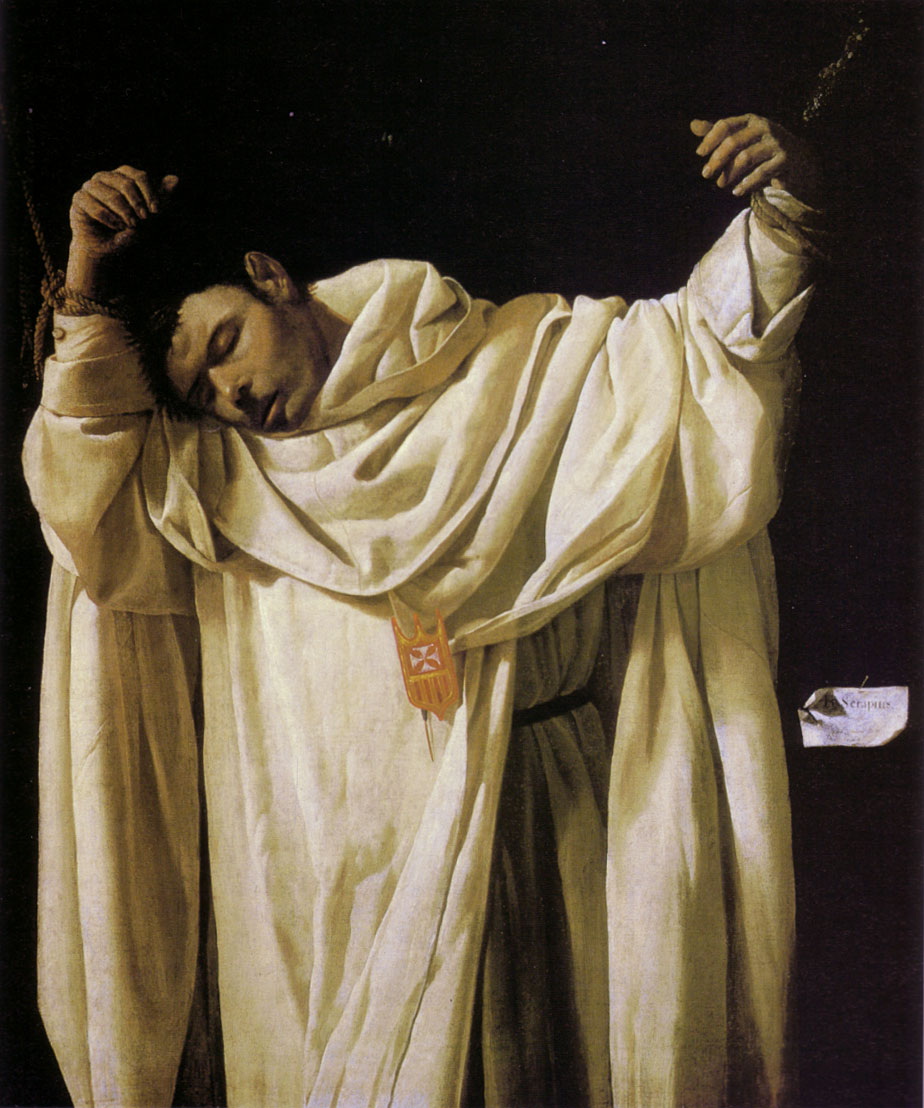

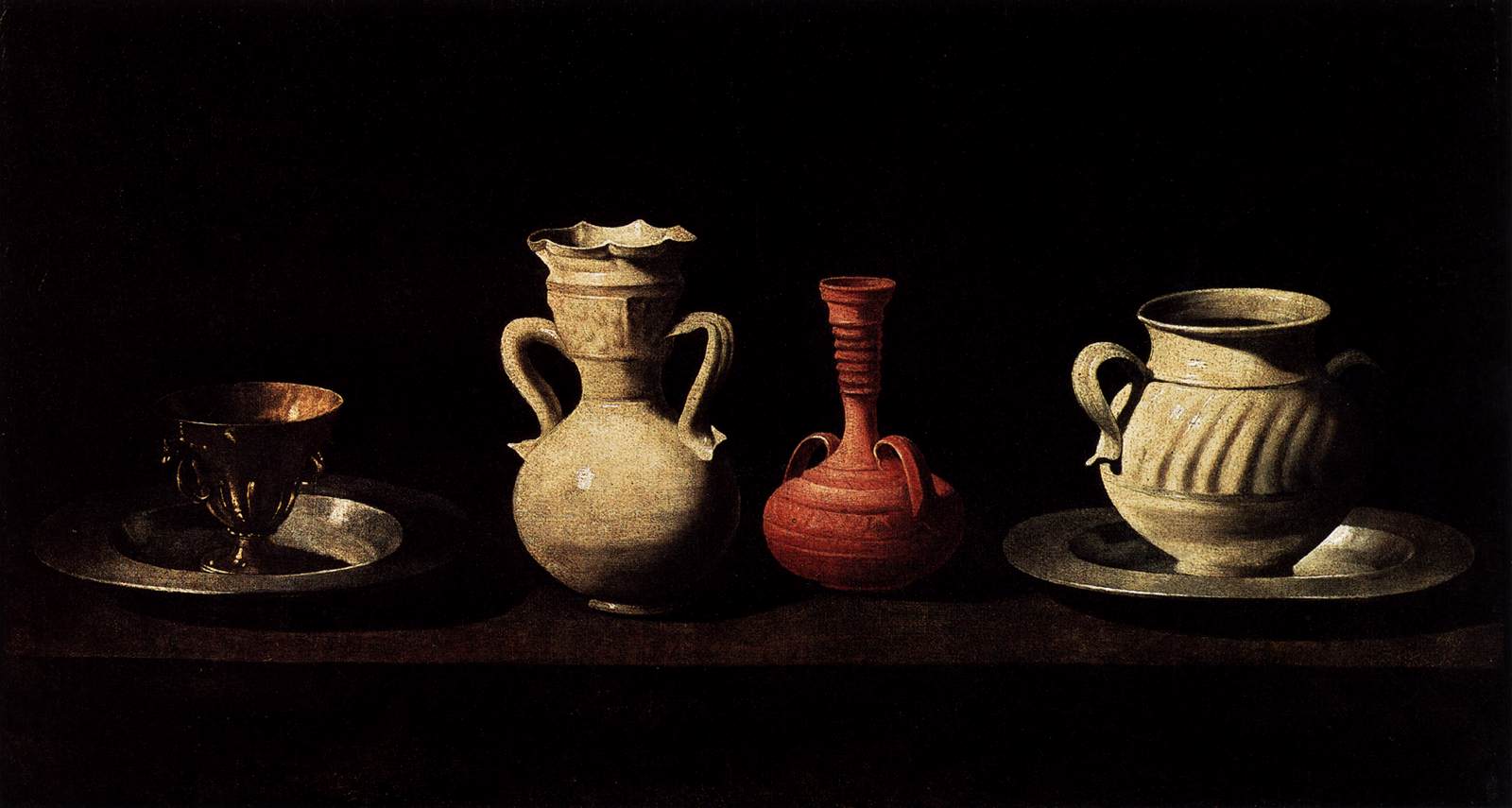


Gericault - the Raft of the Medusa


===
.
.
.
.
.
.
.
.
.
.
.
.
.
.
.
.
.
.
.

notes to self:
Charon (ferrying the dead)

on a different note: Vishvamitra


some fragments of notes:

Butoh
link to Butoh images (from this blog)

Human / De-human
human as human commoditiy
human waste
non-identity / identity as priviledge
Zygmunt Bauman: Wasted Lives, Modernity and its Outcasts

human condition

beauty / non beauty - currently in conflict with impulse to beautify when actually addressing the non-beautiful ...

security as priviledge, withdrawn at will
State of Exemption (Giorgio Agamben)

woman = object of desire = object
personal experience when I became the 'object', object of desire in equal measures to object of despise and object of all and no value; ownable commodity, the devil's accomplice, despised object, the object that should comply and aid relief, object that should obey, should not have the right to choose.

islam (+ other orthodox faiths) = reduction of woman from human to woman

my speculation: women's rights & equality = a temporary allowance mostly bestowed upon the wealthy, to be revoked first of the poor

purgatory existence of humans who feed the consumer lifestyle which feeds itself, which expels growing numbers of humans into the human waste category...
Concerns with societal issues ranging from civil liberty rights losses to 1984 Orwellian Present rather than Future, human as commodity and expelled as waste. (I.e. violations of human rights, human rights in themselves no longer of interest as not complying with consumer culture. globalization does not profit from rights and I speculate it is about to collapse in it's present form)
abolition of slavery = myth = slavery a contemporary reality and western society, consumerism relies on this condition.

Tuesday, May 11, 2010

New Project

I am still working on this project, this is the first completed image.


I am working on several solutions: an installation,
a large composition as well as individual images.


Sunday, May 9, 2010

Wangechi Mutus

"Es geht nicht darum, Dinge auf eine originelle oder ungewöhnliche Weise in etwas Neues zu verwandeln", hat Wangechi Mutu in einem Interview für das Deutsche Guggenheim Magazine erklärt. "Es geht darum, keine Wahl zu haben, darum, ein halbwegs menschliches Leben zu führen, während einem die Menschlichkeit ständig abgesprochen wird.
Es geht darum, sich ein behagliches Heim einzurichten, während die Welt da draußen dir signalisiert, dass du eigentlich ein Krimineller oder ein Tier sein sollst. Ich versuche deshalb auch nicht, einfach so aus Spaß die Dinge nach 'Ghetto' aussehen zu lassen. Ich versuche vielmehr herauszufinden, was an diesem Impuls menschlich zu bleiben auch für diejenigen interessant ist, die nicht in dieser Armut leben müssen. Tatsächlich bin ich überzeugt, dass wir von dieser Denkweise lernen können."

Saturday, May 8, 2010

Take me to Mongolia


a record of another trip through HIghlands, Lowlands, the Taklamakan and jungles, maybe even a transformation from random to certain. (who'd want such a thing!?)

You will probably find accounts of escapism

You are likely to witness my fumbling for and re-defining THAT elusive sense of purpose as a human and lover and artist.

Thursday, May 6, 2010

The yellow Wallpaper

...Firstly, to the story itself. The narrative voice is a repressed woman of the late 19th century, locked in a room with horrid yellow wallpaper, expected by her husband to recover from a mysterious sickness. The more time she spends in this prison, desperate to write, the more disturbed she becomes, until she begins to see a woman crawling within the wallpaper. This is both a study of psychology and a look into the position of women of the period. ...

Thursday, April 22, 2010

Friday, April 16, 2010

future


There have got to be easier ways to organize it all...

Thursday, April 15, 2010

research material


more links for this project:

RICHARD NEVILLE wonders why society picks on art when there are so many other threats to children.

When Sydney police swooped on an upmarket art gallery on the eve of an exhibition of photographs by internationally renowned artist Bill Henson, pandemonium struck. Photographs of pubescent children were removed by police. The tabloid press applauded the censorship and described the images as "child porn". The gallery owners received death threats.

Paedophilia is a motherhood issue, and the Australian Prime Minister Kevin Rudds' personal opinion was that he found the work "revolting" and without "artistic merit". He told the Nine Network that "kids deserve to have the innocence of their childhood protected". Of course they do.

But why pick on an art, when trainer bras and sexy lingerie for 6 years olds are hot items, when 5 years olds go to beauty parlours and have makeovers to celebrate their birthdays, when the advertising industrys' use of very young "models" is morally questionable at so many levels, when ads for jeans are shot like pornography, when ads for lipstick are shot like pornography, when ads for cars are shot like pornography, and when 75% of the internet is pornography.

Why pick on Henson, one of the artists in the high school art syllabus for heavens sake, when our whole popular culture, what's on our telly, in our videos, our movies ,our mags and our newspapers, is shot through with exploitative and violent sexuality. Why worry about Henson when that celebration of sadism, The Passion of the Christ, was a world wide hit.

Why pick on an art photographer, when Paris Hilton's home-movie porno shot her to stardom, and matrons devouring their womens magazines at the hairdresser are tut-tutting about Britneys split-pink pole dance, when entertainers and sportstars of the ilk of the Beckhams have replaced saints as objects of veneration, and our mass media regurgitates all this vomit as though it matters. And we all gossip about it as though it matters, and meanwhile the ice caps are melting.

"Kids deserve to have the innocence of their childhood protected" - of course they do, but... as if. Are kids protected by the commercial TV channels beaming ads into their cots from the day their eyes open. Or when "wrong body" fears induced by the aforementioned use of "models" in advertising apparently causes children to suffer obesity, anorexia,and bulimia. Or when shopaholia replaces creativity and the goal of endless economic growth is not to be questioned, which is why the icecaps are melting. Kids are not protected when the environment isn't.

Kids are not protected when subjected to U.S. air strikes in Iraq and Afghanistan, or when they are blown up by old American cluster bombs in Laos and Cambodia, which happens often and is reported rarely, because most of the space in the newspaper is devoted to the the Beckhams or Paris or Britneys' public meltdowns and the latest baby-bump sightings.

Why pick on an art photographer when the substance which powers our whole society - oil - is starting to dry up. At a time of global food and water shortages, our planet is entering an era of dramatic climate change, and the only obvious way out of the mess is nuclear power which will put the means to create nuclear weapons into the hands of more nutters with grudges.

Henson's disturbing images of pale pubescent nudes in eerie end-of-the-world twilight situations may well be a comment on the scenario described above - consciously or unconsciously. Artists often apprehend the times they live in. After all, the children he depicts are the ones who'll be left to live in the mess.

Meanwhile, can't we have scandals over things that matter more than budding pubic hair, like an $80 million corporate bonus being considered "fair", or that a sole tycoon can manipulate the media on several continents and be lauded. Come on you trusty boys and girls in blue; haul away the loan sharks, the polluters and the pedophiles - leave the artworks on the wall.


Goldsmiths Final Show


Goldsmiths Final Show


like


Monday, April 12, 2010

things to re-visit

things to look at again: http://www.metropolismag.com/pov/20100407/midcentury-architecture-experiments-on-film

http://www.textezurkunst.de/

to do: http://www.cafeoto.co.uk/programme.shtm

http://www.kunstforum.de/geschenkpakete.asp?paket=0

just ordered this book: http://www.versobooks.com/books/ab/a-titles/agamben_g_infancy_RT2.shtml

will do this: http://www.indianchampissage.com/services.htm

http://jmcolberg.com/weblog/ I like this

http://www.pulseconnects.com/

http://www.kadam.org.uk/index.php

http://en.wikipedia.org/wiki/Dhrupad
http://www.dhrupad.info/


http://www.akademi.co.uk/index.htm


research material

Jeff Wall:

a yurt

Rob Voerman


(oops, that's small..) http://www.robvoerman.nl/index.php


Peter Bialobrzeski (case study homes)


======
unrelated, but I kind of liked it: http://www.contextgallery.co.uk/?p=537
======
Hayward Gallery Project Space

I like:


LES FRENCH (2008) is a project of two parts.
We first create ad-hoc configurations of bamboo, binding the joints with wound string, These frames are then sent to a bronze foundry and through a process of loss material casting, the fragile and unlikely structures transform to structural and permanent casts in bronze.

For the top part, with no predetermined idea in mind, we build the functional volumes of the furniture in response to the bronze pieces. Underlining the friction in permanence and value that takes place in the casting process, we wrap a lightweight fabrication in gum-paper strips.

The project is an exercise in process. It will grow to become a family of unique characters, that entertain a variety of principles for lifting volumes from the ground.

All pieces available at Gallery Fumi : www.galleryfumi.com

Saturday, April 3, 2010

Yale Course List


click on here and go to Yale


and the Dalai Lama at MIT World:


Learning to See in the Dark: The Roots of Ethical Resistance
Carol Gilligan


Where Morals Come From-And Why it Matters
Moderator: Christopher Moore PhD '98
Beatriz Luna
John Mikhail
Patrick Byrne


The Idea of Universality in Linguistics and Human Rights
Noam Chomsky
Elizabeth S. Spelke


Science Policy, Politics and Human Rights
Kurt Gottfried PhD '55
Sheila Jasanoff